

The Mythic Plain of Marathon
- Ben Parker
- May 30
- 8 min read

Updated: Jun 6

The word "Marathon" is known in perhaps billions of households around the world. Most commonly, it invokes the 26.2-mile journey between an athlete and an Olympic medal. History enthusiasts may also associate it with the Battle of Marathon in 490 BCE against the Persian Empire. Yet despite the importance of both events, the region also plays an important role both in Mythology and in wider history.
This post will explore the lesser-known significance of the plain of Marathon, specifically its role in Greek Mythology, and how myth can leave a mark on history. But in order to begin, we must journey away from Attica, to a story with a king, an island called Crete, a white bull, and the penance of a great hero.


King Minos, one of many sons of Zeus, ruled on the island of Crete, a region feared for its unmatched naval power. In order to prove his rule was sanctioned by the Olympians, he asked for a sign. Poseidon sent a glorious white bull out of the waves to the grateful ruler, asking only that the creature be sacrificed in his honour. But Minos could not fathom harming such a beautiful animal, and instead sacrificed another.
Poseidon was outraged by this and unleashed his revenge upon the royal household. Not long after, King Minos' wife, Queen Pasiphae, developed an ungodly desire and passion for the white bull and mated with it. Soon after, the queen gave birth to a monster. Its body was that of a man, yet that of a bull.

Minos sent instructions to the master craftsman Daedalus to build a labyrinth below the palace: a complex maze of dark corridors, all leading to a central chamber, that was almost impossible to escape. And so the creature, Asteirion, grew in his subterranean lair, growing in savagery with each passing year. Despite bringing great shame upon Minos, the legend of 'the Minotaur' made Crete more feared and more powerful than he could have ever dreamed. But the white bull from the sea, the father of the Minotaur, was not yet finished with the world.
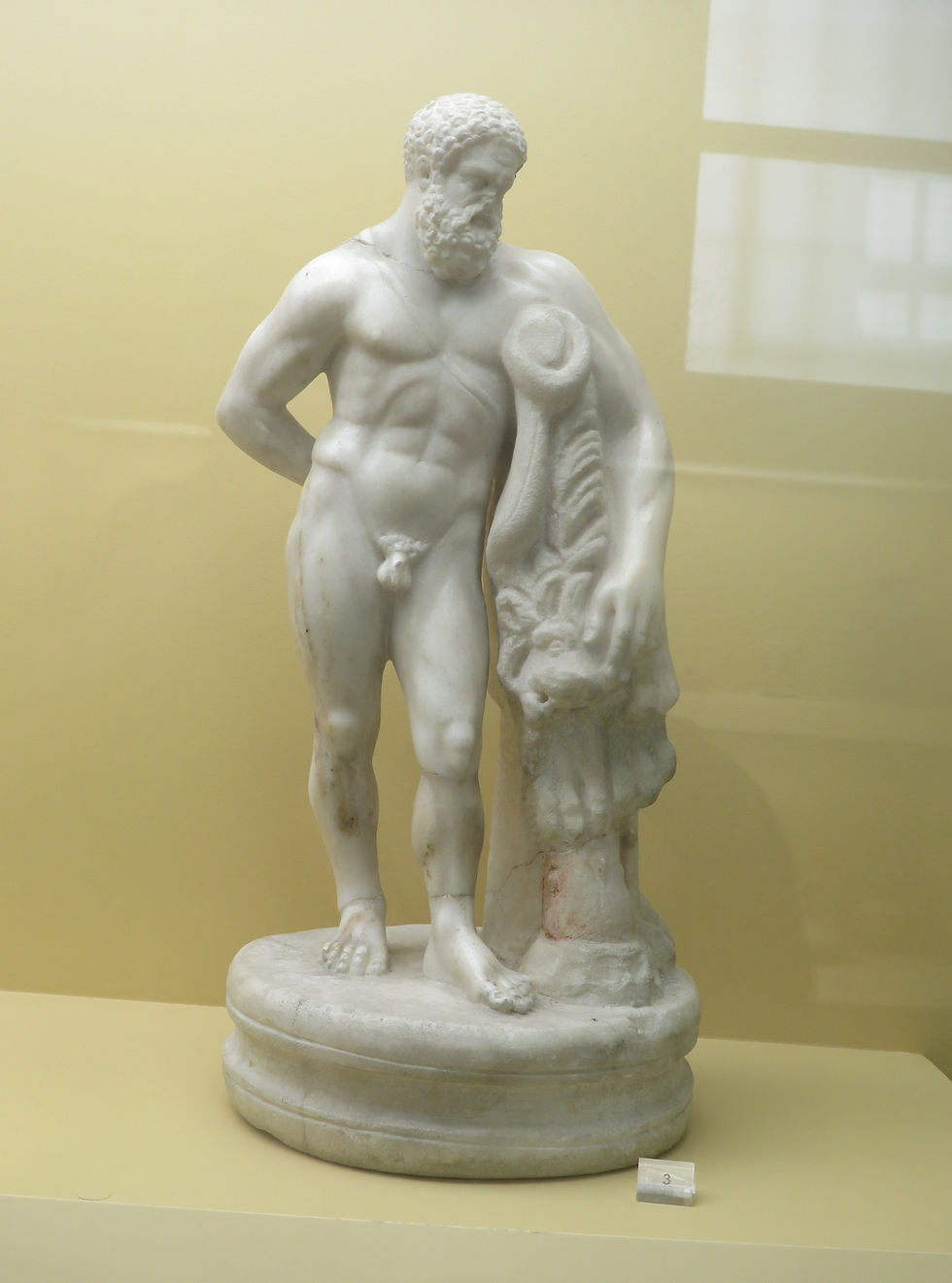
Another son of Zeus, Heracles, was serving a great penance for slaughtering his family. The vengeful goddess Hera placed a madness upon him, and once he realised what he had done, it was too late. Heracles would go on to complete 12 impossible tasks, serving as a slave to his hated cousin Eurystheus, the King of Mycenae and Tiryns. It was during the seventh of these tasks that Heracles was instructed to journey to Crete and help finally rid King Minos of the white bull that he had once so admired, which now ravaged the countryside.

After stalking the creature, Heracles wrestled with the beast, gripping its horns with his bare hands and pulling it to the ground. Eventually, the beast was subdued, but not dead. Heracles brought the animal back to Eurystheus, and from the gates of Tiryns, the bull was released into the wild. It journeyed across the landscape and eventually came to rest in the fertile plain of Marathon, waiting to encounter yet another hero.


As I travelled through the Marathon countryside on a bike I rented from the hotel, heading towards the Athenian Tumulus, I stopped multiple times along the way, taking in the beauty all around me. From almost anywhere on the plain, you can see the mountains, with more olive trees than one could ever possibly count. But as I continued on my journey, I kept imagining this miraculous white bull, roaming the fields, waiting for anyone brave enough to challenge it.

It was, of course, the Great Theseus, the Mythical King of Athens, the region's greatest hero, who, after learning of his royal lineage, rid the lands he would one day rule of the creature. Theseus would put the bull to death, but he was not the first to try. In a full circle moment so typical of the Greek Myths, Minos' son had been staying with King Aegeus, who challenged him to tame the wild animal. When the young man died in the attempt, Minos demanded a yearly tribute of Athenian youths and maidens, or else the Cretan navy would lay waste to the city.
With the help of Minos' daughter, Ariadne, Theseus, a son of Poseidon, would indeed end the tribute by journeying through the cunning walls of the labyrinth and killing the Minotaur, too. Yet he did not come out of the story entirely well. To begin with, he repaid Princess Ariadne’s help, who had betrayed her family and her kingdom in the name of love, by leaving her stranded on the Island of Naxos.
Another tale originates from this myth, in which the hero is not shown in the best of lights. When Theseus was leaving for Crete, his father asked him to instruct the captains that should their vessel return victorious, they should don white sails. If, however, Theseus had perished, the captains were to sport black sails. In the hero's joy and sense of triumph, the request slipped his mind. As the ship sailed into the harbour, the king looked on in despair at the black sails and threw himself from a cliff into the sea.
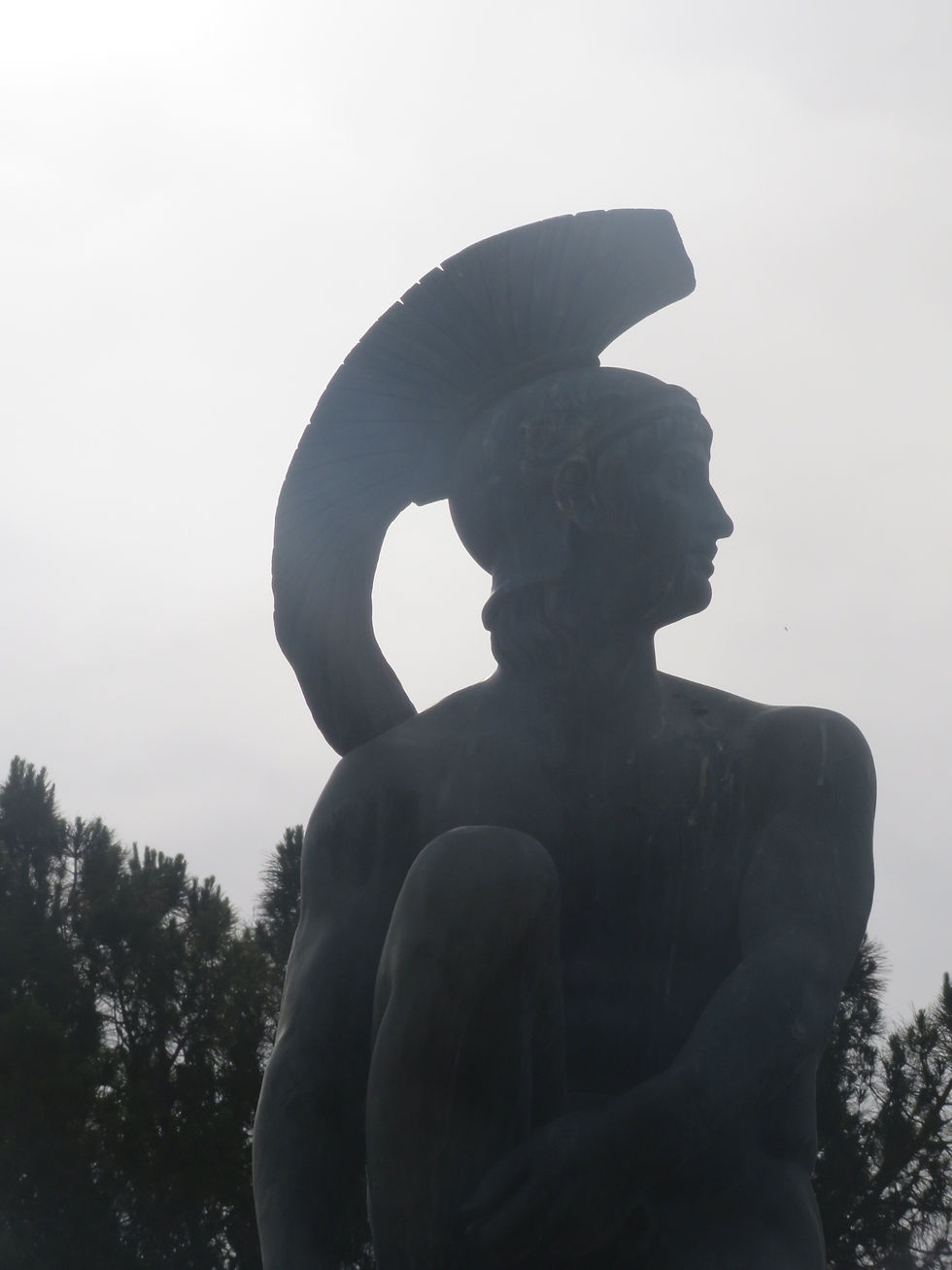
During my travels, I did see what I thought were two black and white bulls in a large open field. I pulled my bike over, settled on neither being the right colour and took a photo, pleased that if I couldn't see 'The Marathonian Bull', I had at least seen a bull, in Marathon. But when I got back to the hotel and downloaded the photos, it appears I instead captured 'The Marathonian Cow'. Close enough.


In some ways, these mythical sites are often (for me at least) more exciting than some of the archaeological remains. In the ruins, you get to see where the Ancients lived and breathed, filling in the rest with your imagination, an experience I also thoroughly enjoyed. But as I journeyed through the landscape, thinking of the way myth has become entwined with the location through heroes such as Theseus and Heracles, I didn't feel like I was searching through the past, but following something that still lived and thrived to this day.
But what happens when that kind of immortality becomes entwined with actual history? That is exactly what happened after the Battle of Marathon in 490 BCE, where the victory was dedicated not only to the efforts of the Athenians and their Plataean allies, but also to the ghosts of Heracles and Theseus, who were said to have slain countless Persians, ensuring their retreat. But these tales were not a way of dedicating the battle to their ancestral heritage, they were presented a fact.

But for me, the most intriguing mythical afterlife of the battle of Marathon concerns a small cave in the region of Oinoe, not too far from the Marathon plain, and a goat-footed god said to lurk there. The Athenians believed that the god of the wild, Pan, whose name derives from the effect his wild singing can have on others, to cause panic, delivered exactly such an effect on the Persians, the catalyst to their retreat. In honour of this story, the cave was forever acknowledged as the sacred cave of Pan, with another cave being given the same honour on the north slope of the Acropolis.


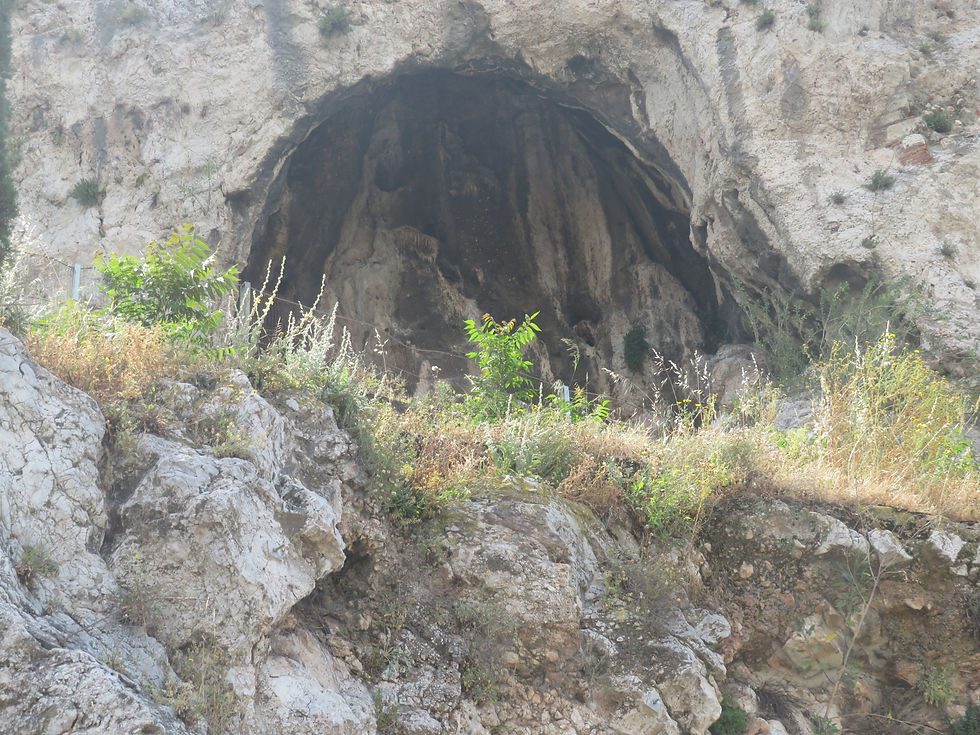
During excavations of the cave at Oinoe, archaeologists found numerous examples of worship to the god, now housed in the Marathon Archaeological Museum. I was in awe of this engraved stele, presenting the rules of worship, as well as other incredible artefacts left as offerings.


However, another discovery here serves as another reminder of how these stories often come full circle. During the excavations, archaeologists found evidence of worship, gathering and civilisation long before the battle of Marathon. A vast collection of pottery from the Neolithic age was found, showing not only the early experimentation with geometric shapes, but also the vast history of the cave and the region.


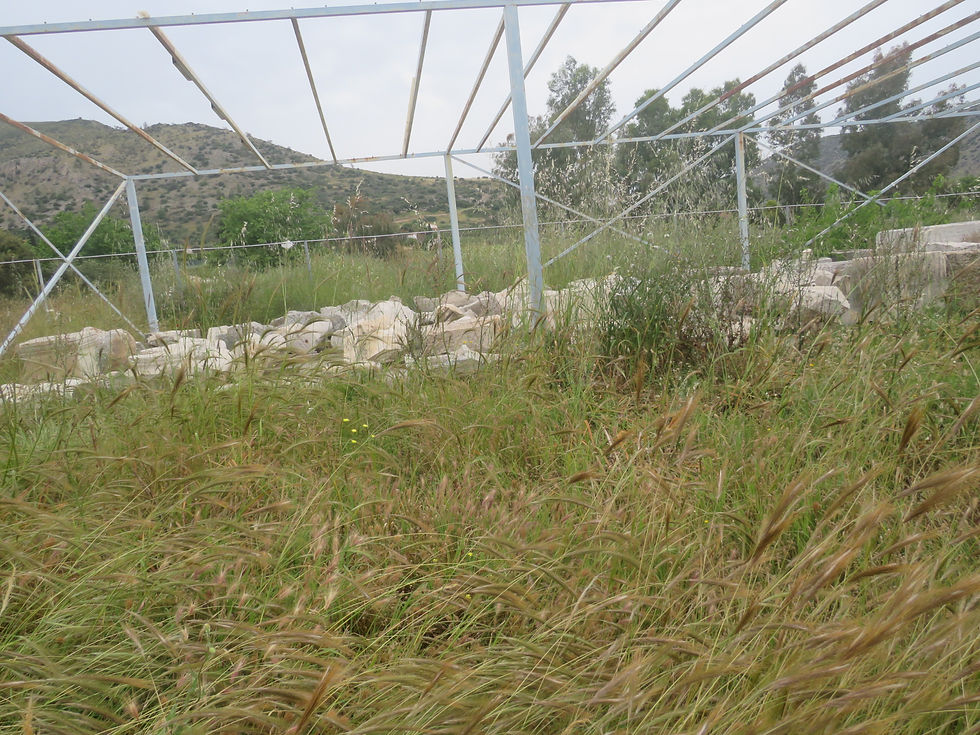
This vast Neolithic history is further explored in the Middle Helladic Tumuli, housed in the museum grounds. To see a sight like this was truly special, travelling back much further into Ancient Greece than I ever thought I would.


I really hope you enjoyed this journey through the intricate relationship between myth and history. There are, of course, other myths centred around the region, such as the Heraclides, hunted by king Eurystheus after Heracles' death, the suicide of Heracles' daughter, giving her name to the Macaria spring, and the burial of Eurystheus' head along the plain. Though despite the significance of these tales as reflected through Euripides' play, Children of Heracles, they also appear to be an attempt to make the hero synonymous with the region of Marathon and wider Attica.
To finish off this post, I have included some of the other finds that I was able to see in the Museum, spanning from the early Neolithic period all the way to the Roman age. I hope you enjoy.




Comments